





5 Questions with CTG UAlbany Researcher Seulki Lee-Geiller
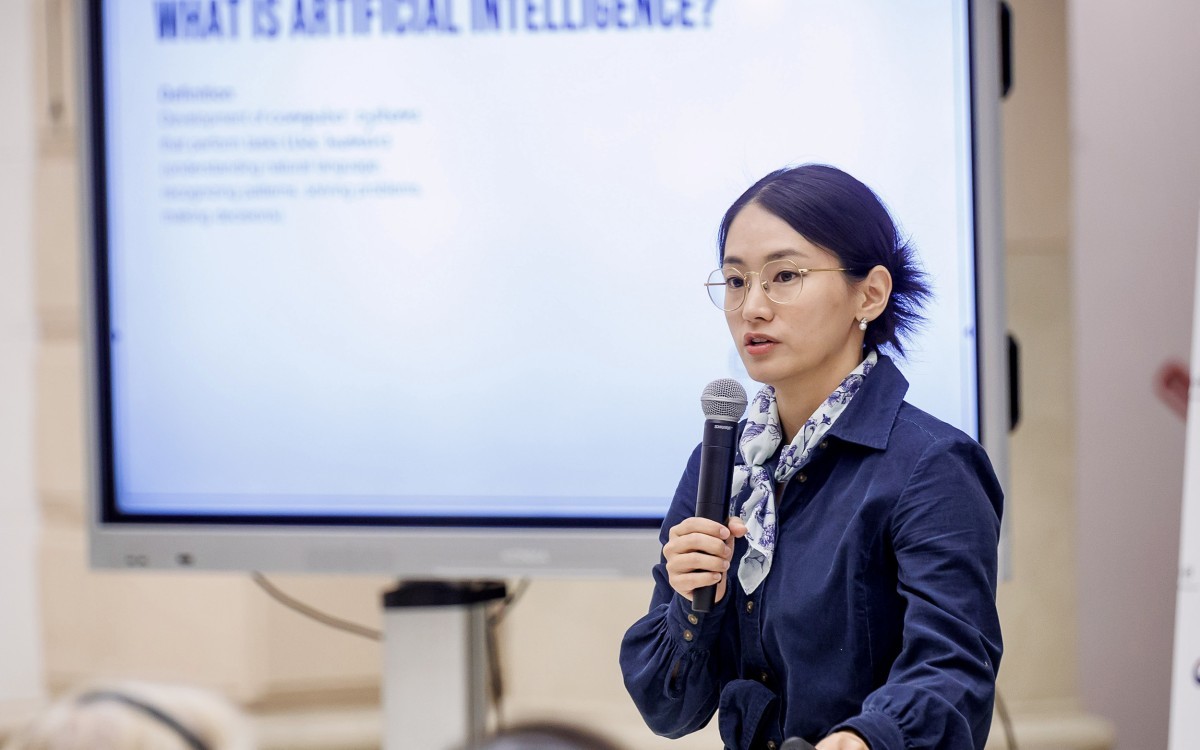
ALBANY, N.Y. (Sept. 3, 2026) — Center for Technology in Government (CTG UAlbany) researcher Seulki Lee-Geiller studies how digital technologies and artificial intelligence are reshaping democracy and the relationship between people and government.
Her research examines digital government, citizen participation and public trust, including how information format, digital literacy and interface design shape people’s experiences with government services. More recently, she has focused on the democratic implications of AI, including its use in elections and policymaking and how AI can be governed in ways that promote transparency, accountability and other public values.
How did your international and professional experiences shape your interest in governance?
I grew up in South Korea and later studied in the United Kingdom and the United States. Living in different countries gave me the opportunity to see how institutions respond to similar public needs in very different ways.
Those experiences made me think more carefully about how people encounter government in their daily lives, whether services feel accessible, whether people feel heard and whether institutions are responsive to their needs.

Working across different sectors also showed me that each approaches public problems with its own goals, incentives and tools. Governments, businesses, nonprofits and research organizations play distinct roles, yet they are deeply interconnected.
That became especially clear when I began studying technology and democratic governance. Developers create technologies, organizations and citizens evaluate whether those tools can improve their work or daily lives and adoption decisions ultimately determine their impact. Those experiences and outcomes then feed back into future development.
From a democratic governance perspective, this cycle works best when values such as transparency, accountability and public engagement are incorporated throughout the process. Having worked in different kinds of organizations helped me see those relationships more clearly, and it continues to shape both the questions I ask and the way I approach my research.
What brought you to CTG UAlbany and what questions are you most interested in exploring?
I had followed CTG’s work for several years and was impressed by how consistently it connected research on technology and government with real public sector challenges. The center has been addressing many of these issues since long before they became as prominent as they are today.
What attracted me most was the opportunity to work at the intersection of research and practice. I believe research should be informed by the real needs of governments and communities, while practical initiatives should be guided by rigorous evidence. CTG has long served as a bridge between those two worlds, and I wanted to be part of that mission.
At UAlbany, I am particularly interested in how digital technologies and AI shape public trust, citizen participation and the broader relationship between people and government.
Why do factors such as information format, digital literacy and interface design matter?
I believe the value of technology comes not simply from its existence, but from how people use it. A digital service may be technically well designed, but it creates public value only when people can access, understand and use it effectively. If people struggle to use a service or it fails to meet their needs, the solution is not to blame users but to improve design.
As more interactions with government move online, digital platforms increasingly shape how people find information, navigate procedures and access services. Yet people do not experience these systems in the same way. They have different levels of digital literacy, different accessibility needs and different preferences for how information is presented. Some may respond better to visual formats, while others prefer clear written guidance.
That is why effective digital government is fundamentally about designing services that people with diverse backgrounds and abilities can easily understand and use. When public services are accessible and responsive, they not only improve service delivery but also strengthen accountability and public trust.
What does responsible AI governance look like and how does that connect with UAlbany’s AI Plus initiative?
Embedding public values into governance becomes even more challenging in the age of AI because AI systems are often complex, opaque and shaped by highly interconnected networks of actors. As a result, responsibility can be difficult to identify and trace.
At a broad level, responsible AI governance means ensuring that AI is developed and used in ways that are safe, fair, ethical and accountable. In practice, however, responsibility looks different depending on the actor involved. For developers, it may mean using appropriate data, reducing biased or inaccurate outputs and creating mechanisms to identify and address problems. For government agencies, it may involve establishing strong standards for oversight, transparency and accountability while carefully considering AI’s broader societal impacts.
This perspective aligns closely with UAlbany’s AI Plus mission. It highlights the importance of helping students understand how AI affects institutions, democracy and society and what role everyone involved in the AI lifecycle plays. Ultimately, responsible AI requires more than any single profession or institution — it requires collective stewardship and continuous collaboration.
What’s something people might be surprised to learn about you?
People who know me only through my professional work are often surprised by how adventurous I am when I travel. Watching lions rest in the Masai Mara while the sun set across the savanna was an unforgettable experience. I also loved snorkeling alongside sea lions and sea turtles in the Galápagos Islands.
One item still on my bucket list is learning how to operate a small cruising boat and exploring parts of the Mediterranean by sea. I think travel offers a wonderful opportunity to experience new perspectives — which, in many ways, brings energy and inspiration back to my work.